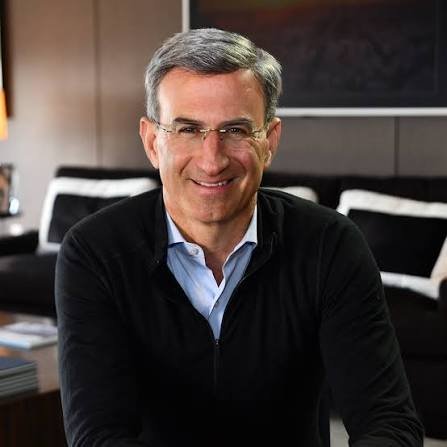
Peter Orszag Biography
1. The Hook & Legacy
Peter Orszag has built an unusually fluid career. He moved from academic economics into presidential policymaking. He then crossed from Washington into global finance.
This Peter Orszag biography examines that uncommon journey. Orszag directed the Congressional Budget Office during the financial crisis. He later became President Barack Obama’s budget director. Today, he leads Lazard as CEO and chairman.
His defining subject has remained remarkably consistent: institutional decision-making under pressure. At the White House, that meant federal budgets and healthcare costs. At Lazard, it means mergers, geopolitical risks, artificial intelligence, and capital allocation.
Orszag became nationally visible during Obama’s first term. He helped translate sweeping political goals into budgetary choices. His work connected healthcare reform with long-term deficit control. That approach made him influential, though sometimes controversial.
His career now connects three powerful worlds: scholarship, government, and Wall Street.
2. Quick Facts Profile Table
| Profile field | Verified information |
|---|---|
| Full Name | Peter Richard Orszag |
| Date of Birth | December 16, 1968 |
| Age | 57 years old, as of September 2026 |
| Place of Birth | Boston, Massachusetts, United States |
| Nationality | American |
| Key Profession | Economist, banker, corporate executive, former government official |
| Current Position | CEO and Chairman of Lazard |
| Major Awards/Achievements | Marshall Scholar; 37th OMB Director; former CBO Director; National Academy of Medicine member |
3. Early Life, Roots & Foundations
Peter Richard Orszag was born in Boston. He grew up in Lexington, Massachusetts. His household placed unusual weight on mathematics and research.
His father, Steven Orszag, was a distinguished applied mathematician. He taught at institutions including Princeton and Yale. His work covered fluid dynamics and computational mathematics. Peter’s mother, Reba Karp, led a research and development business.
Numbers were therefore part of the family environment. So were academic expectations. Yet Peter’s interests soon extended beyond abstract theory. He became fascinated by how governments use economic evidence.
Orszag attended Phillips Exeter Academy in New Hampshire. The school was academically demanding. It also exposed him to national political debates.
One early decision revealed his practical instincts. Many politically interested classmates sought glamorous internships. Orszag instead worked for Senator Tom Daschle. He reportedly drafted speeches while still a student. The experience introduced him to political communication and congressional policymaking.
He entered Princeton University next. Orszag studied economics and graduated summa cum laude in 1991. His senior thesis examined congressional oversight of the Federal Reserve.
The topic was revealing. It joined economic theory with institutional power. That intersection would define his later career. His thesis also received recognition at Princeton.
A Marshall Scholarship took Orszag to Britain. He studied at the London School of Economics. He earned a master’s degree in 1992. His economics doctorate followed in 1997.
His doctoral research examined regime shifts, hyperinflation, and privatization. These were pressing questions after the Soviet Union’s collapse. He also spent time working in post-Soviet Russia with economist Richard Layard.
That period sharpened his understanding of economic transitions. Markets could not be studied in isolation. Political institutions shaped every outcome.
Orszag’s education gave him strong technical credentials. His early political exposure supplied something different. It taught him how evidence survives—or fails—inside government.
That combination became his professional signature.
4. The Rise to Fame & Career Deep-Dive
The Clinton White House
Orszag began building his Washington career during Bill Clinton’s presidency. He worked at the Council of Economic Advisers. His roles included staff economist, senior adviser, and senior economist.
He later became Special Assistant to the President for Economic Policy. These positions placed him near major debates over budgets, taxation, and economic growth.
Building a policy platform
After government service, Orszag moved into policy research. He joined the Brookings Institution. There, he became a senior fellow and deputy director of Economic Studies.
His research covered pensions, taxation, healthcare, and federal spending. He also helped lead the Urban-Brookings Tax Policy Center and Retirement Security Project.
In April 2006, Orszag became the founding director of the Hamilton Project. The initiative promoted evidence-based policies for economic growth and opportunity. Its agenda covered education, infrastructure, savings, and government effectiveness.
Leading the Congressional Budget Office
Orszag became CBO director on January 18, 2007. He held the position until November 25, 2008.
The timing was momentous. America was approaching its worst financial crisis in generations. Congress needed nonpartisan estimates for complex rescue proposals.
Orszag expanded the agency’s work on healthcare and climate change. Healthcare spending became his defining policy concern. He argued that rising medical costs posed a deeper fiscal threat than demographic aging alone.
His CBO work strengthened his reputation on Capitol Hill. He could translate technical projections into political consequences. He also understood congressional scoring rules. That knowledge soon became valuable inside the White House.
Obama’s budget director
President-elect Barack Obama selected Orszag to lead the Office of Management and Budget. He became the 37th OMB director in January 2009.
The appointment placed him inside an economic emergency. Unemployment was climbing. Banks were unstable. Federal deficits were expanding rapidly.
Orszag helped develop Obama’s first budgets. Those plans sought short-term economic recovery and long-term reform. They supported healthcare expansion, education investment, clean energy, and deficit reduction.
Healthcare became Orszag’s central fight. He viewed healthcare reform as fiscal policy. His argument was direct: federal finances could not stabilize without controlling medical costs.
He supported comparative-effectiveness research. This approach evaluates which treatments produce better outcomes. Critics feared greater federal influence over medical decisions. Supporters saw a method for reducing waste.
The debate made Orszag a prominent public figure. The New Yorker described him as a central guardian of Obama’s domestic agenda. Yet congressional analysts later projected larger deficits than the administration expected. That gap exposed the tension between political ambition and independent budget scoring.
Orszag left OMB in July 2010. His relatively early departure prompted speculation about exhaustion and internal disagreements. Public reporting also described tension with economic adviser Larry Summers. No single explanation fully defined his exit.
The Wall Street transition
After Washington, Orszag joined Citigroup in 2011. He became vice chairman of corporate and investment banking. He also chaired its Financial Strategy and Solutions Group.
The move attracted criticism. Some observers saw another example of Washington’s “revolving door.” A former regulator had entered a major financial institution soon after public service.
Orszag’s supporters offered another reading. His expertise covered precisely the issues facing global banks: fiscal policy, healthcare, regulation, and sovereign risk.
He remained active in research and public commentary. He also returned to Brookings as a nonresident senior fellow.
Climbing Lazard
Orszag joined Lazard in May 2016. He started as vice chairman of investment banking.
His responsibilities expanded quickly. He became global co-head of healthcare. He later led North American mergers and acquisitions. In April 2019, he became CEO of Lazard’s Financial Advisory business.
Lazard appointed him company CEO on October 1, 2023. He became board chairman on January 1, 2025.
His “Lazard 2030” strategy targets stronger growth and productivity. It also emphasizes private capital, geopolitical advice, and AI-enabled work.
5. Legacy, Current Status & Impact
Peter Orszag remains Lazard’s CEO and chairman. The firm’s official biography also lists him as a National Academy of Medicine member. He belongs to the Council on Foreign Relations and Aspen Economic Strategy Group. He serves on several institutional boards.
His wife is CNN journalist Bianna Golodryga. Lazard publicly confirms their marriage. Orszag generally keeps his family life separate from corporate communications.
Reliable publications have not established his personal net worth. Estimates from celebrity-wealth websites should therefore be treated cautiously. Executive compensation is different from net worth. Lazard’s filings provide compensation data, but they cannot reveal his complete assets or liabilities.
Orszag’s legacy rests on movement between institutions. He brought academic analysis into government. He brought government experience into banking. That mobility produced both influence and criticism.
His public-policy footprint remains strongest in healthcare economics. He insisted that medical spending belonged inside the budget debate. His corporate work follows the same analytical pattern. He studies how technology, politics, and markets change institutional choices.
He is neither a traditional politician nor a career banker. He is a policy economist who learned to operate near power.
That distinction explains his reach. It also explains the scrutiny surrounding his career.
6. Actionable Takeaways / Lessons From Their Life
- Combine different disciplines: Economics gained power through political understanding.
- Choose serious problems: Healthcare costs shaped Orszag’s national influence.
- Translate complex evidence: Technical expertise matters when people understand it.
- Expect public scrutiny: Crossing powerful institutions creates opportunity and criticism.
Disclaimer: This biography is compiled from verified public records, institutional profiles, interviews, regulatory filings, and established news sources. It is intended solely for educational and informational purposes.
Read more :